
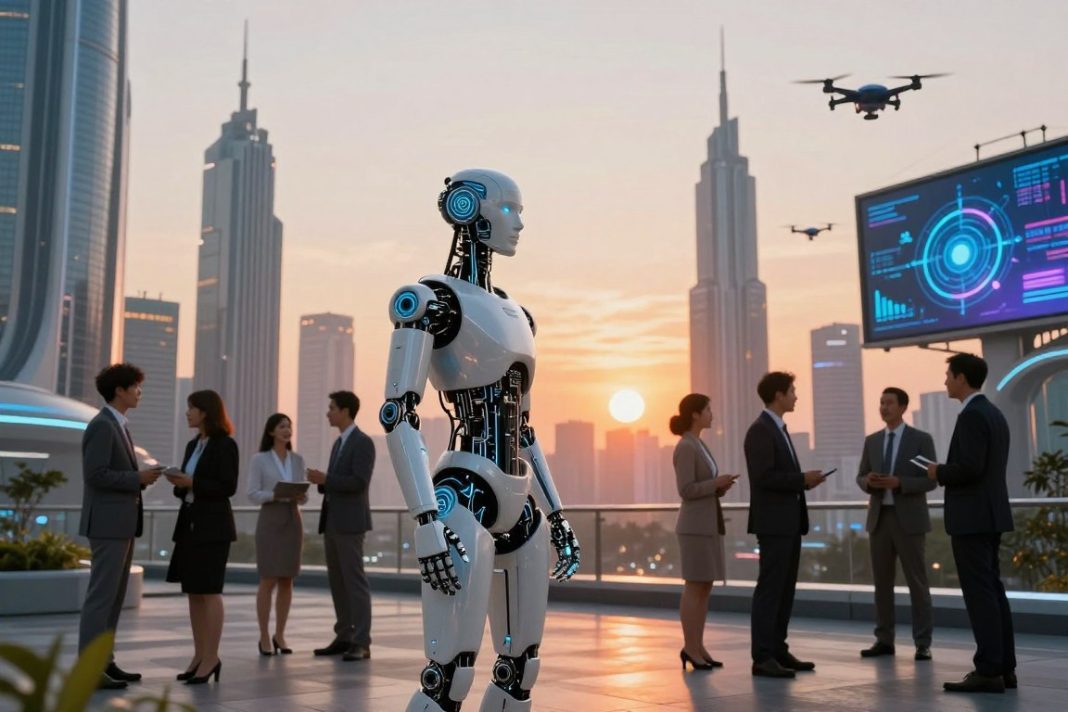
The release of OpenAI’s ChatGPT in late 2022 was a big step forward for artificial intelligence. Since then, many new AI products have come out. They are changing how we work and live in many ways.
Machine learning is making a big difference in many areas. This includes government and our personal lives. As artificial intelligence keeps getting better, it will change our lives and work even more.
Key Takeaways
- The release of ChatGPT has led to a surge in new AI products and solutions.
- Artificial intelligence is transforming various industries and aspects of modern life.
- Machine learning is having a significant impact across different sectors.
- The evolution of AI is likely to have a profound effect on the way we live and work.
- AI is being increasingly adopted in various industries and government agencies.
The Current State of AI Technology
AI technology is moving fast, changing how we live and work. It’s making big strides in healthcare, finance, agriculture, and cybersecurity. This rapid progress is bringing about significant changes.

The world is feeling the effects of AI, pushing innovation and boosting efficiency. As AI grows, it tackles tough challenges and opens up new opportunities for growth.
Key Breakthroughs Reshaping Our World
Recent AI breakthroughs have been key in reshaping our world. Machine learning and deep learning have made AI systems smarter. They can now recognize images, understand language, and predict trends. These advancements are changing industries and creating new chances for businesses and people.
Leading AI Technologies Driving Innovation
Leading AI technologies are leading the way in innovation. Computer vision, natural language processing, and robotics are making intelligent systems. These systems can automate tasks, make better decisions, and improve customer service. As these technologies improve, we’ll see even more exciting uses of AI in the future.
Understanding AI & Future Potential
The journey from narrow to general AI is key to understanding AI’s future. Today, AI systems are mostly narrow, designed for specific tasks. The aim is to create general AI that can do any intellectual task humans can.
The Evolution from Narrow to General AI
The move from narrow to general AI requires big steps in machine learning and deep learning. Narrow AI, like virtual assistants, is already part of our lives. General AI hopes to do more than humans in many areas.
Current Limitations of AI Systems
Today’s AI systems can’t think like humans and can’t apply what they learn to new situations. For example, an AI trained to play chess might not know what a “draw” is unless it’s told.
Pathways to More Advanced Intelligence
To get smarter AI, we need to make AI applications that learn from less data and handle new situations better. This means better algorithms and more computing power.
Predictive Models for AI Development
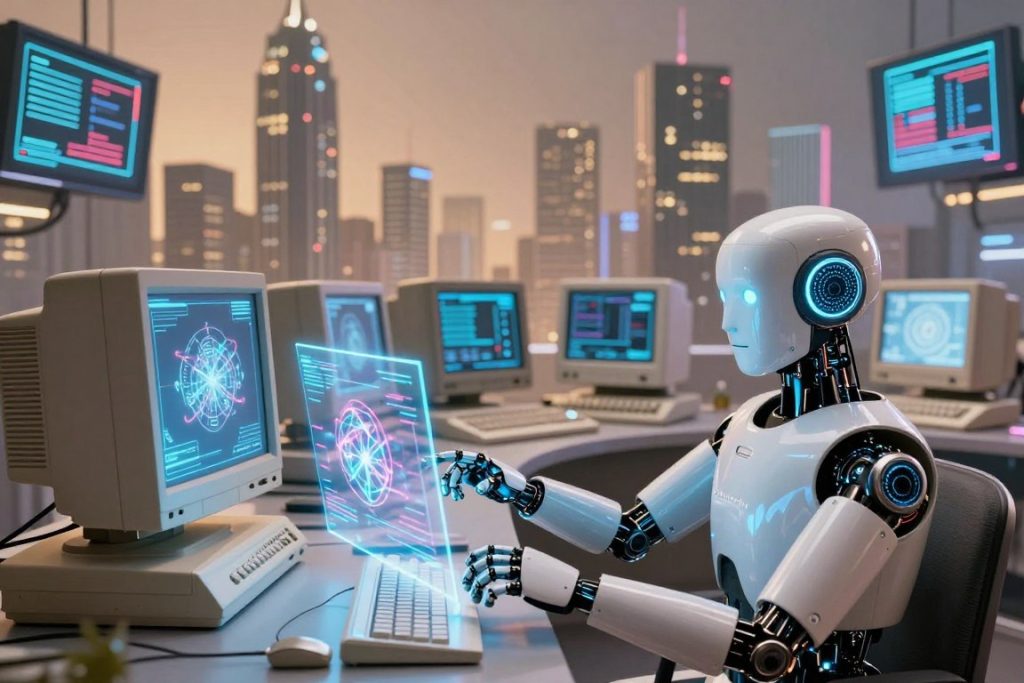
Predictive models are vital for seeing how AI will grow. They help researchers spot challenges and chances, guiding the creation of smarter AI.
By studying trends in AI applications and machine learning, experts can forecast future achievements and hurdles. Knowing what’s coming helps us use AI’s power while avoiding dangers.
AI’s Transformative Impact on the Global Economy
AI is changing the world’s economy in big ways. It’s making things more efficient and changing how we do business. Experts say AI could add trillions to the global economy, showing its huge growth potential.
Job Transformation: Beyond Simple Displacement
AI is changing jobs, not just taking them away. Automation is freeing people to do more creative work. This could lead to more innovation and productivity.
As digital transformation grows, workers are learning new skills. This helps them thrive in an AI-driven world.
Andrew Ng says, “AI is like electricity. It will change many industries, just like electricity did.” This change brings challenges but also chances for growth and development.
New Economic Models Emerging from AI Integration
AI is also creating new ways to do business. Smart devices and IoT are making things more connected. This leads to better production and new business ideas.
- Data-driven decision-making
- Predictive maintenance and quality control
- Personalized consumer experiences
These new models help businesses compete and grow the global economy.
Revolutionizing Healthcare Through Intelligent Systems
Healthcare is changing fast, thanks to AI and smart systems. These changes are making patient care better, making clinical work easier, and improving health results.
Diagnostic and Treatment Innovations
AI is bringing big changes to how we diagnose and treat diseases. AI can look through lots of medical data fast and right, helping doctors find and treat diseases sooner and better.
Early Disease Detection Systems
AI is helping find diseases like cancer early. This means treatments can work better and patients can get better faster. These systems use smart learning to check medical images and patient info.
AI-Assisted Surgical Procedures
AI is making surgeries safer and more precise. AI gives surgeons real-time data during operations. This helps them make better choices and lowers the chance of problems.
Personalized Medicine and AI Algorithms
AI is also key in making medicine fit each person. AI looks at genetic data and medical history to create treatments just for you. This makes care more effective and cuts down on bad reactions.
AI in healthcare is not just making patients healthier. It’s also making healthcare systems work better. As technology keeps getting better, we’ll see even more cool uses of AI in medicine. This will keep pushing healthcare forward.
Reimagining Transportation in an AI-Driven Future
The transportation world is on the verge of a big change, thanks to AI. As we head towards a future with more automation, AI is key in changing how we travel.
Autonomous Vehicles: Progress and Remaining Hurdles
Autonomous cars are leading this change, aiming to make travel safer and more efficient. Significant progress has been seen in self-driving tech, with many companies testing on public roads.
But, there are still substantial hurdles to clear. These include getting past regulatory issues and winning over the public.
Smart Infrastructure and Traffic Optimization
AI is also making traffic flow better and managing infrastructure smarter. Smart traffic management systems use real-time data to cut down on traffic jams and shorten travel times.
By adding AI to our roads, cities can become better places to live. They’ll have reduced emissions and cleaner air.
The Future of Work: Human-AI Collaboration
The future of work is not just about AI replacing humans. It’s about humans and AI working together. As artificial intelligence gets better, the best workplaces will be those where humans and AI collaborate well.
Essential Skills for the AI Era
In this new era, workers need skills that match AI’s abilities. They need critical thinking, creativity, and tech skills. As machine learning handles routine tasks, humans will focus on tasks that need empathy, problem-solving, and innovation.
| Skill | Description | Relevance to AI Era |
|---|---|---|
| Critical Thinking | Analyzing information objectively | High |
| Creativity | Generating new ideas and solutions | High |
| Technical Literacy | Understanding and working with technology | High |
Emerging Models of Human-AI Partnership
New ways of working with AI are coming up. Augmented intelligence is making humans better, not replacing them.
Augmented Intelligence in Professional Settings
In work, augmented intelligence helps with better decisions, smoother processes, and better customer service.
Creative Collaboration with AI Systems
AI is also helping in creative work, helping humans come up with new ideas. This teamwork is leading to new ideas and digital transformation in many fields.
Ethical Considerations in Our AI-Powered Society
AI is everywhere now, and we must think about its ethics more than ever. As AI gets smarter, we need to tackle the ethical issues it brings up.
The ethics of AI are complex and wide-ranging. A big worry is that AI might make old biases worse.
Addressing Algorithmic Bias and Ensuring Fairness
Algorithmic bias happens when AI acts unfairly because of bad data or algorithms. To fix this, we need to make AI fair and open. This means using data that shows all kinds of people.
Privacy Concerns in an Increasingly Connected World
AI’s growth has made privacy a big issue. AI gathers lots of personal info, so we must protect our privacy and stop data leaks.
Developing Robust Regulatory Frameworks
We need strong rules to handle AI’s ethics. These rules should let AI grow but also keep people safe from harm.
By focusing on ethics and making good laws, we can use AI for good. This way, AI will help everyone, not just a few.
AI at the Frontier of Environmental Sustainability
AI is becoming key in solving environmental problems. It’s part of a big change, called digital transformation. This change brings new ways to tackle old ecological issues.
Advanced Climate Modeling and Prediction
AI is making climate modeling better. It looks at huge amounts of data to guess what the future might hold. This helps us prepare and lessen the impact of climate change.
Optimizing Resource Management for a Sustainable Future
AI is also making resource use smarter. It works with smart devices and IoT to save water, cut down on waste, and improve energy use. All these efforts help make our future greener.
AI’s role in making our planet better is huge. It’s a big step towards a world that’s more resilient and sustainable. As we keep moving forward, AI will keep helping us find ways to live in harmony with nature.
The Social Dimensions of Advanced AI Systems
Artificial intelligence (AI) is changing how we live and talk to each other. It’s in our daily lives, from voice assistants to smart homes. AI helps with everything from fraud detection to personalized advice.
Transforming Human Relationships and Communication
AI is reshaping how we connect and talk. AI chatbots and virtual assistants are everywhere. Andrew Ng, AI pioneer, said AI is like electricity, changing many fields.
AI tools can make connecting easier but also reduce face-to-face talks. This might harm deep, meaningful relationships.
Bridging the Digital Divide in AI Access
It’s key to make AI accessible to everyone. AI’s growth must include all people worldwide. A report says AI’s market will grow, but access gaps could widen social inequalities.
Work is being done to make AI more available. This includes improving digital skills and reaching out to diverse groups. Our goal is a future where AI benefits everyone.
AI Research Frontiers: What Lies Ahead
AI research is moving fast, with new discoveries and technologies popping up all the time. Looking ahead, several areas are set to lead to big leaps in AI.
Quantum Computing and AI Acceleration
The integration of quantum computing is a big deal for AI. It could make AI processes much faster. This is because quantum computing can tackle problems that regular computers can’t.
Experts say combining quantum computing with AI could open up new possibilities. This mix could lead to major breakthroughs in drug discovery, climate modeling, and more.
Neuromorphic Computing and Brain-Inspired AI
Neuromorphic computing is another key area. It aims to create computers that work like the human brain. This could lead to AI that learns and acts quickly.
Neuromorphic computing draws inspiration from the brain. It offers a fresh way to develop AI. As AI gets smarter, this technology will likely play a big role.
Conclusion: Navigating Our AI Future
We are on the edge of an era led by artificial intelligence. It’s clear that AI will change many parts of our lives. Our success in using AI depends on how well we use it and handle its risks.
Artificial intelligence is growing fast, changing many industries. To move forward, we need to balance new ideas and being careful. This way, we can enjoy AI’s benefits without facing too many problems.
Creating a culture of openness and teamwork is key. This will help us use AI to its fullest. Together, we can make a better future for all.
