

Affiliate marketing remains a powerful monetization strategy for content websites in 2026, with the global industry valued at approximately $20 billion and growing steadily. For website owners—bloggers, niche authority sites, and review platforms—the choice of commission model directly impacts earnings potential, risk, and alignment with audience behavior.
The three primary models are Cost Per Action (CPA), Cost Per Sale (CPS), and Revenue Share (often called RevShare). According to recent data, CPS (including revenue-sharing structures) is the most common, used by about 48% of programs, followed by CPA at 31%. Revenue Share models are particularly dominant in recurring-revenue niches like SaaS and subscriptions.
Is Affiliate Marketing Legit? The Data Speaks For Itself
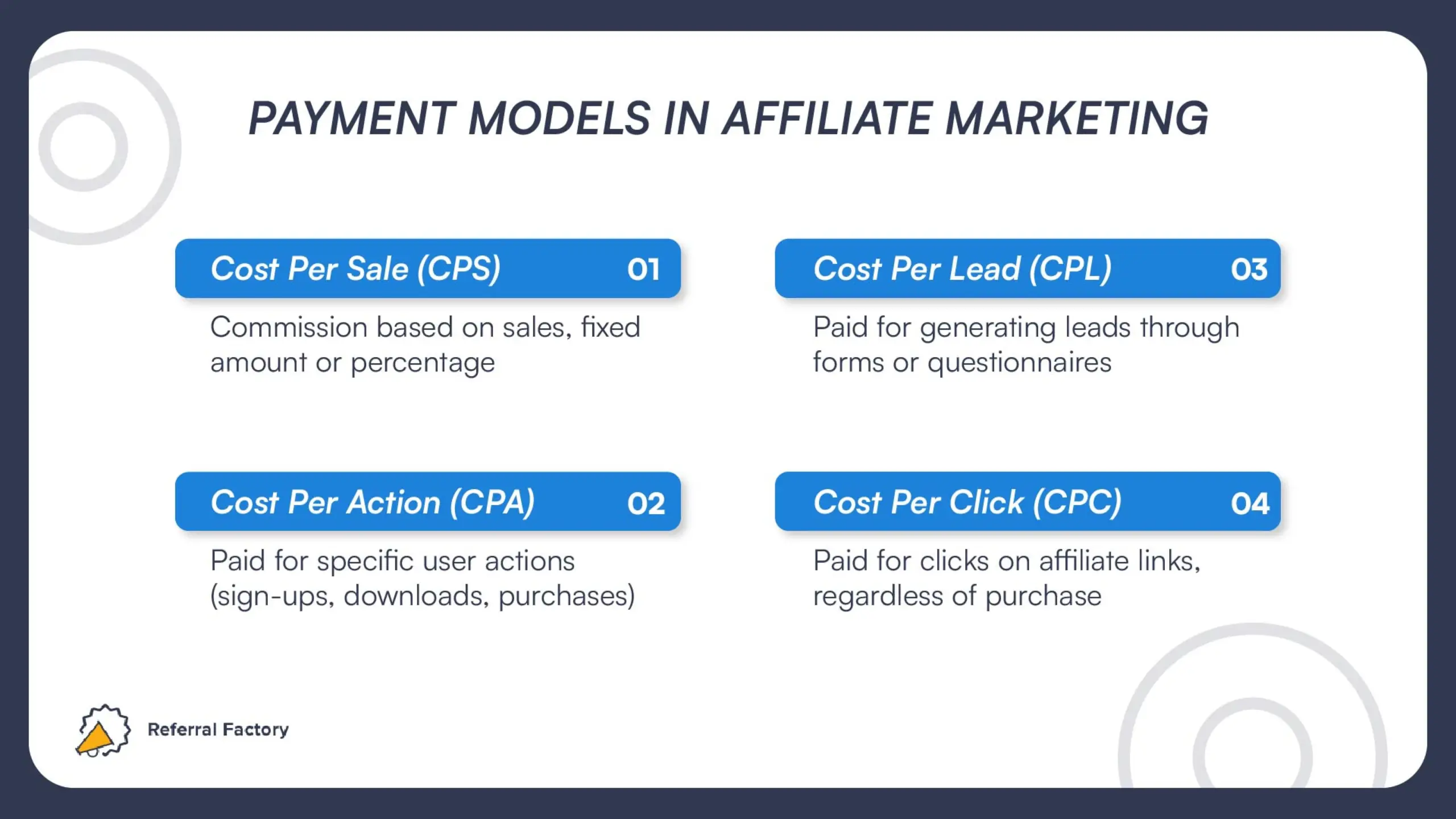
Common affiliate payment models include CPA, CPS, and Revenue Share, with CPS leading in popularity.
Understanding these models helps you select programs that match your site’s traffic quality, niche, and content style. This guide explains each in depth, with pros/cons, real-world examples, and advice for content websites.
What Is Cost Per Action (CPA)?
CPA, or Cost Per Acquisition/Action, pays affiliates for specific user actions beyond just sales. These actions might include form submissions, sign-ups, app downloads, or trial registrations.
Merchants favor CPA because it ties payouts to measurable milestones, reducing risk while building customer pipelines.
How CPA Works:
- You promote a merchant’s offer via links or banners.
- A user clicks and completes the defined action (e.g., newsletter signup).
- The platform tracks and validates the action (often with server-side verification).
- You earn a fixed payout, typically $1–$100+ depending on action value.
CPA often overlaps with CPL (Cost Per Lead) for lead-generation focuses.
CPA Marketing: a Low-Risk, High-ROA Approach | InMotion Hosting
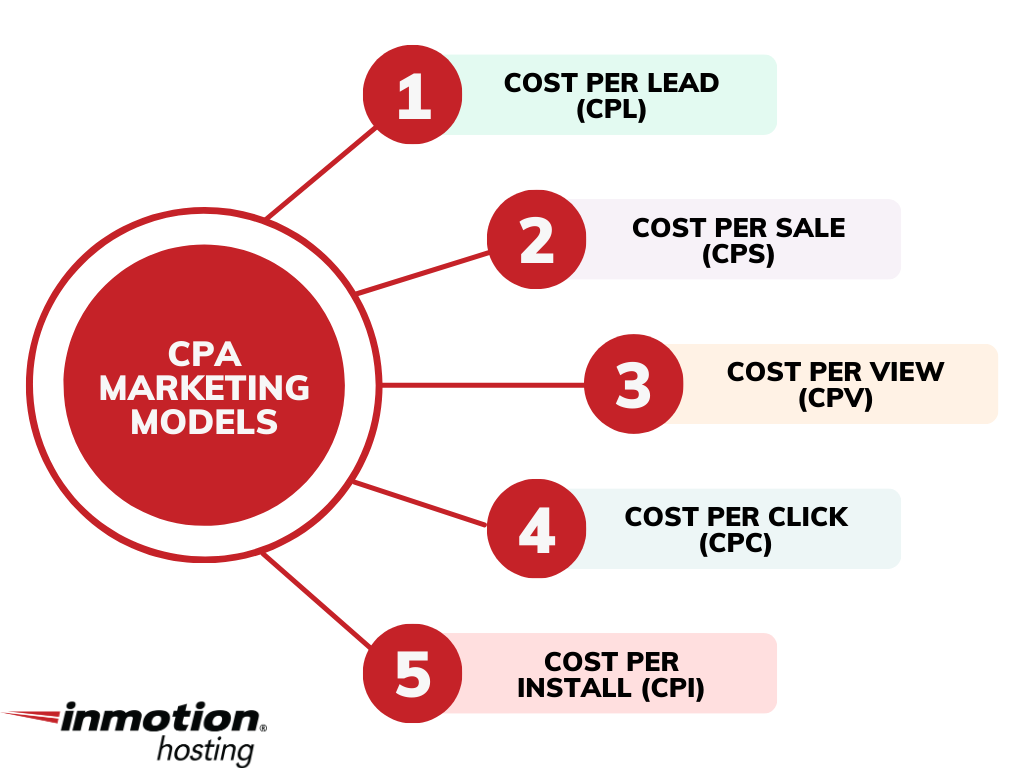
CPA models reward a range of actions, making them flexible for lead-focused campaigns.
Pros for Content Websites:
- Lower conversion threshold—easier for informational content.
- Faster payouts since no full sale required.
- Ideal for top-of-funnel content (guides, comparisons).
Cons:
- Lower per-action payouts compared to sales.
- Higher scrutiny for lead quality (fraud prevention).
- Variable rates; some actions pay minimally.
Real-World Examples: Finance and insurance sites excel with CPA offers for quote requests or applications (payouts $20–$200). Educational blogs promote free trial sign-ups for online courses.
Platforms like CJ Affiliate and Impact.com offer robust CPA programs.
What Is Cost Per Sale (CPS)?
CPS pays a commission only when a referred user completes a purchase. It’s the classic “pay per sale” model, often structured as a percentage of the sale amount (e.g., 5–30%).
This aligns incentives perfectly: Merchants pay for revenue, affiliates earn based on sales driven.
How CPS Works:
- Promote products with unique tracking links.
- User clicks, browses (within cookie window), and buys.
- Platform attributes the sale and calculates commission.
- Payouts are percentage-based or occasionally flat per sale.
CPS dominates e-commerce and retail programs.

Cost Per Sale: CPS: CPS vs CPA: Which One is More Profitable for …
CPS models focus on completed sales, offering higher potential earnings for conversion-optimized content.
Pros for Content Websites:
- Higher earnings per conversion (especially high-ticket items).
- Evergreen potential—product reviews drive ongoing sales.
- Trusted by audiences (recommendations feel authentic).
Cons:
- Requires strong buying intent traffic.
- Longer cookie windows needed for complex purchases.
- Returns/cancellations can reverse commissions.
Real-World Examples: Amazon Associates uses CPS (1–10% commissions) for product review sites. Fashion blogs earn from clothing sales via Awin or Rakuten partners.
Many networks default to CPS for retail merchants.
What Is Revenue Share (RevShare)?
Revenue Share pays affiliates an ongoing percentage of revenue generated by referred customers—often for the customer’s lifetime or subscription duration.
This model shines in subscription-based or recurring-revenue businesses, turning one referral into passive income.
How RevShare Works:
- Referral signs up and becomes a paying customer.
- You earn a cut (10–50%) of their payments.
- Commissions recur monthly/annually as long as the customer stays active.
- Advanced platforms handle attribution and adjustments.
RevShare is essentially recurring CPS.

Introduction To Revenue Sharing Models – FasterCapital
Revenue Share models create ongoing income streams, ideal for SaaS and subscription promotions.
Pros for Content Websites:
- Highest long-term earning potential (compounding passive income).
- Rewards high-quality traffic that retains customers.
- Strong in B2B/SaaS niches with high LTV (lifetime value).
Cons:
- Delayed initial payouts (wait for customer payments).
- Dependent on merchant retention.
- More selective programs.
Real-World Examples: Tech blogs reviewing project management tools earn 20–50% recurring via PartnerStack (e.g., Asana, ClickUp referrals). Hosting review sites get lifetime commissions from providers.
Platforms like PartnerStack and Impact.com specialize in RevShare.
Side-by-Side Comparison: CPA vs. CPS vs. Revenue Share
| Model | Payout Trigger | Typical Rates | Best Traffic Type | Risk for Affiliate | Long-Term Potential |
|---|---|---|---|---|---|
| CPA | Specific action (lead, signup) | Fixed $5–$100+ | Informational/Top-funnel | Low | Moderate |
| CPS | Completed sale | 5–30% of sale amount | Buying intent | Medium | High |
| Revenue Share | Ongoing customer revenue | 10–50% recurring | High-quality/Loyal | Higher initial | Highest |
CPI Vs CPA Vs RevShare: Choosing The Right Payout Model For Your …
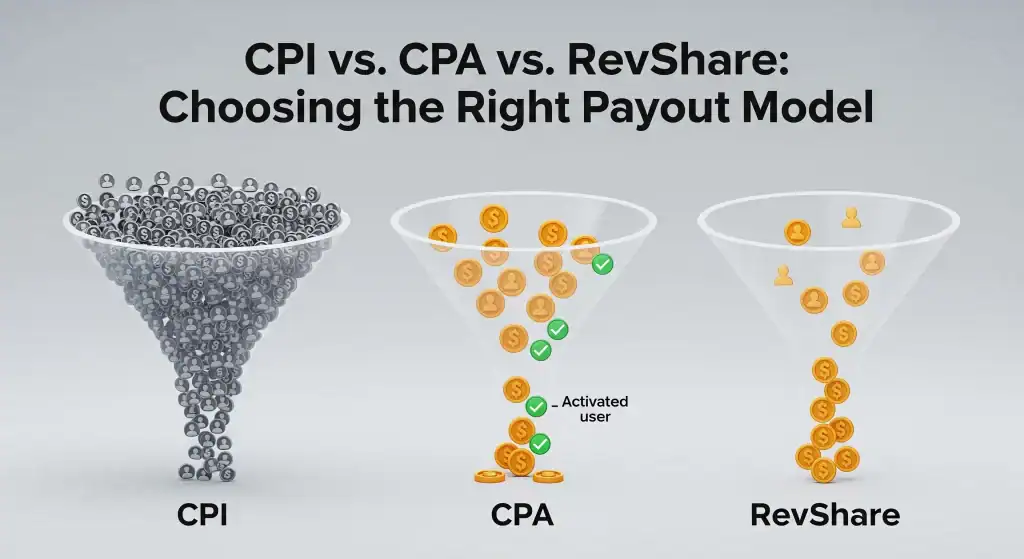
Visual comparison of payout models, highlighting differences in risk and reward.
Hybrid models are rising in 2026—combining upfront CPA with recurring RevShare for balanced incentives.
Choosing the Right Model for Your Website
Your decision depends on several factors:
- Niche and Audience:
- E-commerce/product reviews → CPS (e.g., Amazon, Rakuten).
- Lead generation (finance, education) → CPA.
- Software/tools/subscriptions → Revenue Share (PartnerStack, Impact.com).
- Content Type:
- Comparison tables/lists → CPS excels.
- Tutorials/guides → CPA for trials.
- In-depth reviews → RevShare for long-term value.
- Traffic Volume and Quality:
- High volume, lower intent → CPA.
- Targeted, loyal audience → RevShare maximizes LTV.
- Risk Tolerance:
- Beginners → Start with CPS (reliable).
- Established sites → Layer RevShare for passive growth.
Diversify across models and platforms. Many successful sites earn 60% from CPS, 30% RevShare, 10% CPA.
Trends in 2026 favor hybrids and performance bonuses, with AI optimizing attribution for fairer RevShare tracking.
Your Guide to Affiliate Commission Models – Phonexa
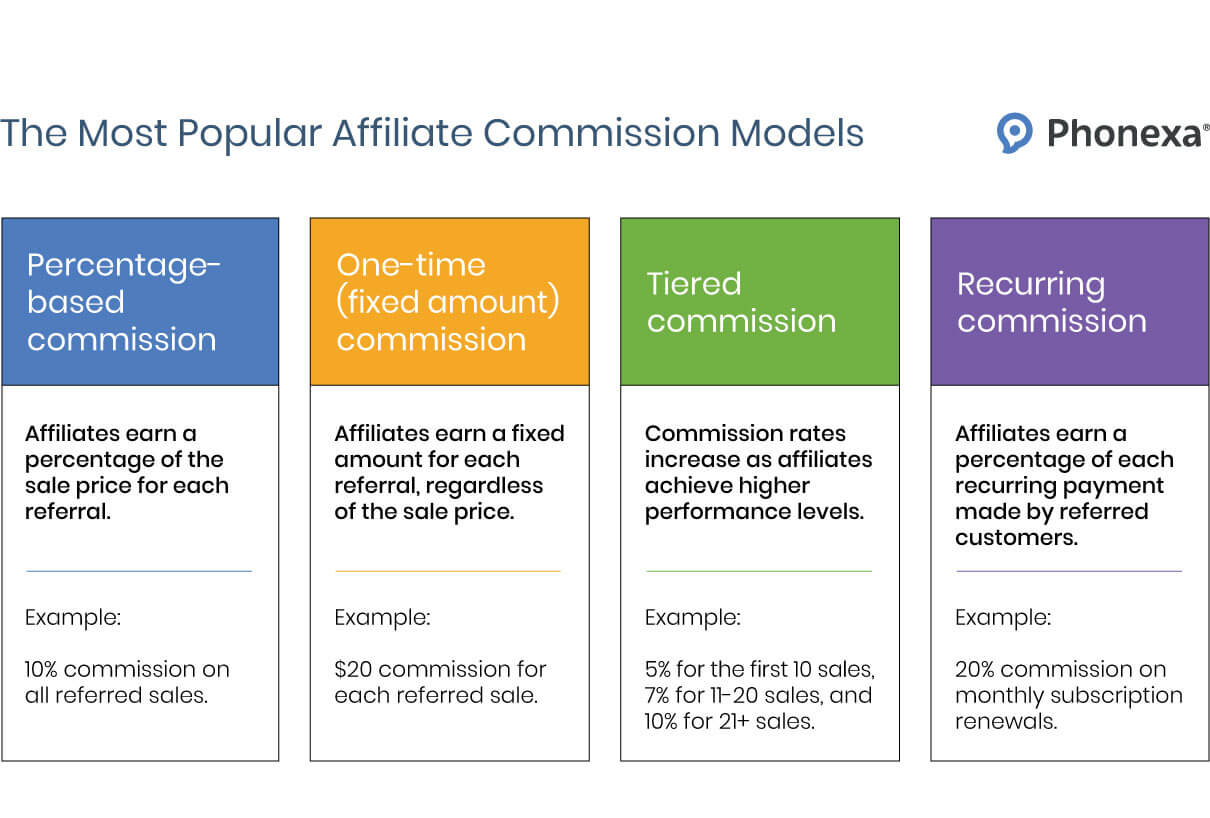
Overview of affiliate commission structures, showing how models fit different strategies.
Best Practices for Success
- Focus on helpful content—Google prioritizes value over promotion.
- Disclose affiliations transparently.
- Use deep links and product feeds for natural integration.
- Track performance to prioritize high-converting models.
- Build email lists—owned traffic boosts all models.
Conclusion
CPA, CPS, and Revenue Share each offer unique advantages for website monetization in 2026. CPS provides reliable volume earnings, CPA offers quick wins for leads, and Revenue Share builds true passive income through recurring commissions.
The “right” model aligns with your niche, content, and audience journey. Many top earners combine all three across platforms like Amazon Associates (CPS), CJ Affiliate (CPA/CPS), and PartnerStack (RevShare).
Start by auditing your content and traffic, then apply to matching programs. Ethical, value-driven promotion turns these models into sustainable revenue.
