

Disclosure: This post contains affiliate links. If you sign up or make a purchase through one of these links, I may earn a commission at no extra cost to you. All opinions are based on extensive research and industry insights as of 2026.
The affiliate marketing landscape in 2026 is more sophisticated than ever, with the industry projected to surpass $20 billion globally. Yet, a common point of confusion persists: the distinction between traditional affiliate networks and modern partner management platforms (often called partnership automation platforms).
Many use the terms interchangeably, but they represent different approaches to managing performance-based partnerships. Traditional affiliate networks have been the backbone since the late 1990s (think Amazon Associates launching in 1996), while partner management platforms emerged in the 2010s to address evolving needs like influencer collaborations, B2B referrals, and advanced analytics.
Understanding the real differences helps merchants choose the right tool for scalable growth and helps partners (affiliates, creators, influencers) identify where to find the best opportunities. This in-depth guide breaks it down clearly, with examples, comparisons, and practical insights for long-term success.

Affiliate Marketing: Tips, Tricks, and Best Practices for 2026
The traditional affiliate marketing ecosystem typically centers around networks as intermediaries between merchants and affiliates.
What Are Traditional Affiliate Networks?
Affiliate networks act as marketplaces connecting merchants (brands selling products/services) with affiliates (publishers promoting them for commissions).
These platforms originated to simplify one-to-many relationships: One merchant could recruit thousands of affiliates without building in-house infrastructure.
Core Characteristics:
- Marketplace Model: Affiliates browse and apply to multiple merchant programs in one place.
- Focus on Affiliates: Primarily commission-based promotions via links, often for e-commerce or digital products.
- Basic Infrastructure: Provide tracking links, reporting dashboards, and payment processing.
Popular Examples in 2026:
- CJ Affiliate (Commission Junction)
- Awin (including ShareASale)
- Rakuten Advertising
- ClickBank
- Amazon Associates
These networks excel at volume—CJ and Awin collectively host tens of thousands of programs across retail, finance, and travel.

Brand Integrity and Affiliate Marketing: 6 Pitfalls to Avoid – CAKE
A common hierarchy in traditional affiliate programs places the network as the central hub for tracking and payments.
What Are Modern Partner Management Platforms?
Partner management platforms represent the next evolution, designed for a broader “partnership ecosystem.”
They manage not just affiliates but multiple partner types: influencers, strategic alliances, referral partners, resellers, and even agencies. The emphasis shifts from pure affiliate recruitment to automated relationship management and performance optimization.
Core Characteristics:
- Automation and Integration Focus: Built for scalability with CRM-like tools, API integrations, and AI-driven insights.
- Multi-Partner Support: Handles diverse models (e.g., influencers on social, B2B SaaS referrals) in one dashboard.
- Advanced Capabilities: Multi-touch attribution, fraud detection, contract automation, and content syndication.
Popular Examples in 2026:
- Impact.com
- PartnerStack
- Tune (formerly HasOffers)
- Everflow
- Partnerize
These platforms power enterprise-level programs for brands like Airbnb, HubSpot, and Adidas, enabling complex partnerships beyond traditional links.
The Key Differences: A Side-by-Side Comparison
While both facilitate performance marketing, the distinctions are significant. Here’s a clear breakdown:
| Aspect | Traditional Affiliate Networks | Modern Partner Management Platforms |
|---|---|---|
| Primary Focus | Affiliate recruitment and basic tracking | Full partnership lifecycle management |
| Partner Types | Mainly content affiliates and publishers | Affiliates + influencers + referrals + B2B resellers |
| Tracking & Attribution | Mostly last-click; cookie/postback based | Multi-touch, cookieless, AI-enhanced |
| Features | Link generation, basic reporting, payment processing | Automation (contracts, onboarding), deep integrations, fraud AI |
| Scalability | Great for volume of affiliates | Ideal for complex, high-value partnerships |
| Integrations | Limited (e.g., e-commerce carts) | Extensive (CRM, analytics, social platforms) |
| Pricing Model | Often override commission on merchant side | Subscription/SaaS fees + percentage |
| Best For | E-commerce brands, beginners, high-volume programs | SaaS, enterprise, creator/influencer-heavy brands |
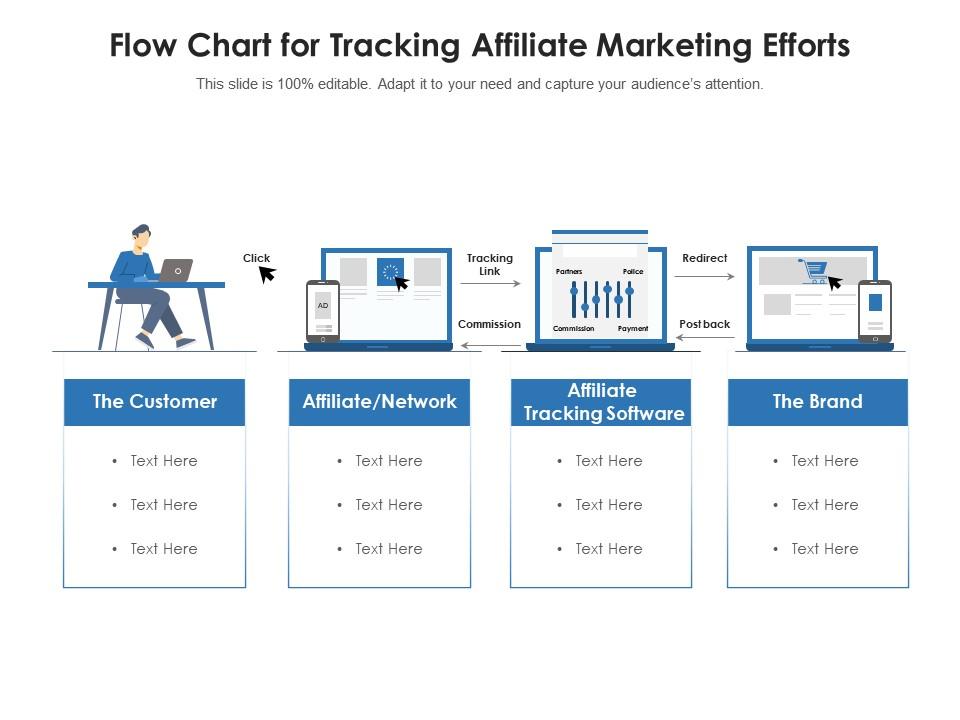
Flow chart for tracking affiliate marketing efforts | Presentation …
Tracking flows in modern platforms often incorporate advanced attribution, differing from simpler network models.
Deeper Dive into the Differences
- Scope and Flexibility
- Networks are like “app stores” for affiliate programs—standardized and transactional.
- Partner platforms function more like enterprise software, customizable for unique partnership strategies.
- Technology and Innovation
- In a cookieless 2026, networks have adapted with server-side tracking, but platforms lead with probabilistic matching and first-party data tools.
- Platforms often include built-in influencer discovery and content approval workflows.
- Reporting and Insights
- Networks provide solid EPC (earnings per click) and conversion data.
- Platforms offer predictive analytics, partner tiering, and ROI forecasting.
- Onboarding and Management
- Networks: Self-service applications.
- Platforms: Automated contracts, personalized outreach, and performance-based tiering.
Pros and Cons of Each Approach
Traditional Affiliate Networks
Pros:
- Easy entry for small merchants and beginner affiliates.
- Vast existing affiliate pools—no need to recruit from scratch.
- Low setup costs (often free for affiliates).
- Proven reliability for retail and CPA models.
Cons:
- Less control over partner quality.
- Limited support for non-affiliate partners.
- Basic attribution can undervalue content creators.
- Higher fraud risk in open marketplaces.
Modern Partner Management Platforms
Pros:
- Comprehensive ecosystem management.
- Better data for optimizing high-value partnerships.
- Stronger compliance and fraud prevention.
- Scalable for global, multi-channel programs.
Cons:
- Higher costs (SaaS fees can start at thousands monthly).
- Steeper learning curve.
- Smaller built-in marketplaces (more recruitment effort needed).
- Overkill for simple affiliate-only programs.
Real-World Use Cases: When to Choose Which
Choose a Traditional Network If:
- You’re an e-commerce brand launching a program quickly (e.g., fashion retailer using Awin for coupon sites and bloggers).
- You want access to thousands of ready affiliates (e.g., travel company leveraging Rakuten’s cashback partners).
- Budget is limited, and focus is volume sales.
Example: A mid-sized online store might use CJ Affiliate to partner with review sites and deal bloggers, driving seasonal traffic efficiently.
Choose a Partner Management Platform If:
- Your program includes influencers and referrals (e.g., SaaS company using PartnerStack for recurring commissions).
- You need advanced automation (e.g., enterprise brand managing global ambassadors via Impact.com).
- Long-term, high-LTV partnerships are key.
Example: A B2B software company uses Impact.com to orchestrate agency referrals, content partnerships, and influencer campaigns, tracking multi-touch influence on deals worth thousands.
Many brands adopt hybrids: Using networks for volume affiliates while running premium partnerships on a dedicated platform.
The Future: Convergence and Trends in 2026
The lines are blurring. Networks like Awin have added influencer tools, while platforms like Impact.com expand marketplace features.
Key trends:
- AI-Driven Matching: Platforms increasingly use AI for partner recommendations.
- Privacy-First Tracking: Both adapt to regulations, but platforms lead.
- Creator Economy Integration: TikTok/Instagram shops favor flexible platforms.
- Direct vs. Network Debate: More brands build in-house programs on platforms for control.
By 2027-2028, experts predict consolidation, with hybrid solutions dominating.
How to Choose the Right Option for Your Needs
Assess your goals:
- Business Stage: Startups often start with networks; scaling brands migrate to platforms.
- Partner Diversity: Multiple types? Go platform.
- Technical Resources: Limited team? Networks are simpler.
- Budget and ROI: Calculate potential earnings vs. fees.
Research current reviews and test platforms—many offer demos.
Conclusion
The real difference boils down to scope and sophistication: Traditional affiliate networks provide accessible, volume-driven marketplaces ideal for classic affiliate models, while modern partner management platforms deliver automated, ecosystem-wide tools for diverse, high-value partnerships.
In 2026, success often comes from aligning your choice with strategy—whether leveraging established networks like CJ or Awin for reach, or investing in platforms like Impact.com or PartnerStack for depth.
Both approaches drive real results when used ethically and strategically. Focus on building genuine value for audiences, and the right infrastructure will amplify your efforts.
Which model aligns with your goals? Consider exploring programs on these platforms to see the differences firsthand.
(Word count: approximately 1,920)

The Ultimate Guide to Affiliate Marketing
A summary visual of the affiliate marketing process, highlighting the role of networks in traditional setups.
